
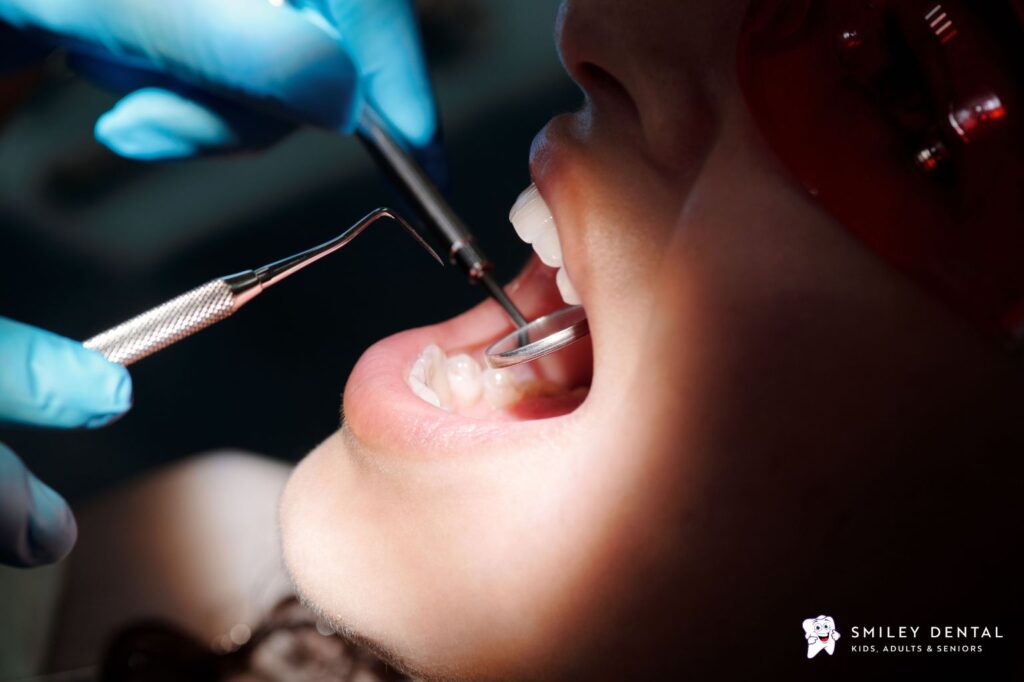
Tooth sensitivity usually shows up as a brief, sharp zing when you bite into something cold, hot, sweet, or acidic, and it tends to fade once the trigger is gone. A cavity can cause that same kind of sensitivity, but it may also lead to discomfort that lingers, shows up with no obvious trigger, traps food, or gets worse when you chew as the decay progresses. Because the two can feel so similar in the early stages, a dental examination is often the only reliable way to know which one you’re actually dealing with.
That overlap is exactly what trips people up. A cracked tooth, worn enamel, receding gums, or a recent whitening treatment can all mimic the sting of a cavity, and a small cavity can sit quietly for months without causing any pain at all. So a single symptom, on its own, doesn’t tell you much.
In this guide, we’ll walk through what everyday sensitivity typically feels like, what an early or “stage 1” cavity may (and may not) feel like, whether sensitivity can happen without any decay involved, whether products like Sensodyne actually do anything for a cavity, and when it’s time to have a dentist take a look.
Quick Answer: Tooth Sensitivity vs. Cavity
Tooth sensitivity often produces a short, sharp sensation right after contact with cold, heat, sweets, or acidic food, and it typically settles down once the trigger is gone. A cavity can also cause sensitivity, but it’s more likely to bring discomfort that lingers, shows up without a clear trigger, traps food between teeth, or turns into pain when you bite down as the decay deepens. Since these symptoms overlap so much, a dentist may need to examine the tooth, and sometimes take an X-ray, to figure out what’s actually going on.
Sensitivity or Cavity? Key Signs to Compare
Rather than one single “tell,” the difference usually shows up as a pattern: how a tooth reacts, how long that reaction lasts, and whether it’s isolated to one spot or spread across several teeth.
| Feature | Tooth Sensitivity | Possible Cavity |
| Cold drinks | Often triggers a brief, sharp sensation | Can trigger pain if decay reaches sensitive areas |
| Hot foods/drinks | May cause sensitivity | May cause discomfort in deeper decay |
| Sweet foods | Can trigger sensitivity | May trigger pain around the decayed area |
| Pain duration | Often brief once the trigger is removed | May linger or become more persistent |
| Pain without a trigger | Less typical | Can occur, especially as decay progresses |
| Pain when biting | Less typical | May occur, depending on the tooth |
| Visible hole | Usually absent | May be present in established decay |
| White, brown, or dark changes | Not necessarily present | May occur with tooth decay |
| Food getting trapped | Not a typical sign | Can occur around a cavity |
| Cause | Exposed dentin, gum recession, enamel wear, etc. | Bacterial tooth decay and loss of tooth structure |
This table offers general clues, not a diagnosis. Symptoms like these can also overlap with a cracked tooth, worn enamel, gum recession, a defective filling, or enamel erosion, which is exactly why home comparisons can only take you so far.
What Tooth Sensitivity Usually Feels Like
Everyday sensitivity tends to follow a fairly recognizable pattern: a sharp, sudden twinge triggered by something cold, occasionally by something hot, and sometimes by sweet or acidic foods. It often fades within a few seconds of removing the trigger. Some people notice it while brushing, especially near the gumline, or in areas where the gums have started to recede. It can affect one tooth or several at once.
That said, sensitivity shouldn’t automatically be written off as harmless. If it’s persistent, worsening, or limited to a single tooth, it’s worth having checked rather than assumed away.
What a Cavity May Feel Like
A cavity can cause sensitivity to cold or sweets, but it may also bring pain that lingers well after the trigger is gone, a dull ache when chewing, food that keeps getting stuck in the same spot, or visible discoloration and a hole. As decay reaches deeper into the tooth, pain can become more frequent or start on its own, without any obvious stimulation.
Here’s the part that surprises a lot of patients: a cavity can exist without causing any pain at all, particularly in its early stages. No pain doesn’t mean no cavity; it just means the decay hasn’t reached a nerve-rich area yet.
How Pain Duration Can Help You Compare Them
Duration is one of the more useful clues, even though it isn’t a hard rule. Sensitivity tends to begin right after a trigger, feel sharp, and stop soon after the trigger is removed. Cavity-related discomfort, on the other hand, can linger after the trigger, show up more frequently over time, or occur with no clear stimulation as the decay reaches deeper structures. There’s no universal number of seconds that separates the two; pain duration varies from person to person and condition to condition.
Can a Tooth Be Sensitive but Have No Cavity?
Yes. A tooth can absolutely be sensitive without any decay present. Common causes include exposed dentin, gum recession, worn or eroded enamel, frequent exposure to acidic foods and drinks, aggressive brushing, teeth whitening, cracked or damaged enamel, and lingering sensitivity after a recent dental treatment.
The takeaway here isn’t that sensitivity is nothing to worry about. It’s that sensitivity by itself doesn’t confirm a cavity. It also doesn’t mean an exam is unnecessary, since some of these causes (like a cracked tooth or eroding enamel) still benefit from professional attention.
What Does a Stage 1 Cavity Feel Like?
This is one of the more counterintuitive parts of cavity detection: very early tooth decay often causes no noticeable symptoms at all. At this stage, the changes may only be visible as white or chalky spots on the enamel, or subtle shifts in how the surface looks, signs of localized mineral loss rather than a true hole.
Early demineralization isn’t the same thing as an established cavity. With the right preventive care, early decay can sometimes be managed or even remineralized before it progresses further. Once true cavitation occurs and tooth structure is lost, brushing and toothpaste alone can’t rebuild it; that requires a filling or other restorative treatment. It’s also worth noting that stage 1 cavities don’t always look white, and they don’t always come with pain; appearance and symptoms vary quite a bit from person to person.
Can Sensodyne Heal a Cavity?
No. Desensitizing toothpastes like Sensodyne are designed to reduce the discomfort of sensitive teeth by helping block the pathway between the tooth surface and the nerve, but they don’t repair an established cavity or rebuild lost tooth structure. If sensitivity relief makes a tooth feel better, that’s a sign the product is managing a symptom, not evidence that any underlying decay has been treated. A true cavity generally needs professional treatment, such as a tooth-colored filling, to actually address the problem.
Can Tooth Sensitivity Go Away?
Yes, tooth sensitivity can sometimes improve or disappear, depending on what’s causing it. Reducing acidic food and drink exposure, switching to a fluoride or desensitizing toothpaste, softening your brushing technique, and giving temporary sensitivity from a recent dental treatment time to settle can all help. Sensitivity related to gum recession or enamel wear may also ease with the right care plan.
That said, there’s no guarantee sensitivity will resolve on its own. If it persists, worsens, is limited to one tooth, or shows up without an obvious trigger, it’s a good idea to have it evaluated rather than wait it out.
What Can Cause Tooth Sensitivity Besides a Cavity?
Gum Recession
When gums pull back, they expose the tooth root and the dentin underneath, which lacks the protective enamel layer covering the crown, making that area much more reactive to temperature and sweets.
Enamel Erosion
Frequent exposure to acidic foods and drinks can gradually wear down enamel, thinning the protective barrier over the dentin and nerve.
Aggressive Brushing
Brushing with too much pressure, or using a hard-bristled brush, can wear away enamel and contribute to gum recession over time. A soft-bristled brush and gentle, angled strokes are generally easier on both.
Teeth Whitening
Whitening products and treatments can cause temporary sensitivity for some people, which typically settles down after treatment ends.
Cracked Teeth
A cracked tooth can cause sensitivity and pain that feels a lot like a cavity, but it isn’t decay. It’s a structural issue that usually needs its own evaluation and treatment.
Recent Dental Treatment
Mild sensitivity following a filling, cleaning, or other procedure is common and usually improves within a few weeks. If it doesn’t, it’s worth a follow-up visit.
When Should Tooth Sensitivity Make You Suspect a Cavity?
Concern tends to rise when sensitivity is isolated to one tooth, becoming more frequent or intense, lingering well after hot or cold exposure, triggered by sweets, associated with chewing or biting, paired with visible changes to the tooth, involves food trapping, or shows up without any clear trigger. These are warning signs worth paying attention to, not a diagnosis. Only a dentist can determine what’s actually causing them.
How Does a Dentist Tell if It Is Sensitivity or a Cavity?
A dental evaluation typically involves reviewing your symptoms and dental history, visually examining the tooth, checking for decay and cracks, evaluating your gums and any exposed tooth surfaces, assessing where and how you feel sensitivity, and examining the areas between your teeth. Dental X-rays are used when appropriate, since they can reveal decay between teeth, beneath existing dental work, or near the gumline, areas a patient simply can’t see or feel on their own. Not every visit requires X-rays; a dentist will determine when they’re actually needed based on what they find during the exam.
Tooth Sensitivity vs. Cavity: Symptoms at a Glance
More consistent with sensitivity:
- Brief, sharp pain
- Triggered by cold, hot, sweet, or acidic foods
- Stops quickly once the trigger is removed
- No visible hole
- May affect multiple teeth
More concerning for a cavity:
- One tooth repeatedly hurts
- Pain lingers after the trigger is gone
- Pain occurs without a clear trigger
- Food consistently gets stuck in one spot
- Visible hole or discoloration
- Pain when chewing
- Symptoms are gradually getting worse
Neither pattern can confirm a cavity on its own. Think of these as clues that help you decide whether it’s time to come in, not a home diagnosis.
Sensitivity Does Not Always Mean a Cavity
It’s worth restating plainly: a sensitive tooth is not automatically a cavity. Sensitivity is a symptom, a reaction your tooth has to a trigger. A cavity is a structural disease process caused by tooth decay. A tooth can become sensitive because of exposed dentin, gum recession, enamel wear, whitening, or several other conditions that have nothing to do with decay. And just as important, a cavity can exist without ever causing sensitivity at all. Keeping these two ideas separate, symptom versus structural problem, is the clearest way to think about what’s actually happening in your mouth.
When Should I See a Dentist for Tooth Sensitivity or a Possible Cavity?
It’s a good idea to schedule a visit if you’re dealing with persistent or worsening sensitivity, sensitivity limited to one tooth, a toothache, pain when biting, pain that lingers after hot or cold foods, visible discoloration or a hole, food that keeps getting trapped in the same spot, or a cracked tooth. Facial swelling, fever with dental pain, difficulty swallowing, difficulty breathing, or significant dental trauma call for prompt dental or emergency medical attention.
How Can a Dentist in Beverly, MA Evaluate Tooth Sensitivity?
If you’re on the North Shore and trying to figure out whether your tooth pain is sensitivity or something more, a dentist in Beverly, MA can evaluate your symptoms, check for early tooth decay, look at gum recession and enamel wear, examine the areas between your teeth, and review any existing dental work that might be contributing to the discomfort. Combining your symptom history with a hands-on exam, and X-rays when appropriate, is how a Beverly, Massachusetts dental team narrows down what’s actually causing the sensation, rather than guessing from symptoms alone.
How Can You Prevent Tooth Sensitivity and Cavities?
Use fluoride toothpaste. Fluoride helps strengthen enamel and makes it more resistant to acid attacks.
Brush gently. A soft-bristled brush and light pressure protect enamel and gum tissue better than scrubbing hard.
Clean between your teeth. Flossing or another interdental cleaning method removes plaque that a toothbrush can’t reach.
Limit frequent acid and sugar exposure. How often you expose your teeth to sugar and acid tends to matter more than any single food or drink.
Address dry mouth. Persistent dry mouth reduces saliva’s natural protective effect and can raise your risk for both sensitivity and decay.
Be careful with whitening. Whitening treatments can temporarily increase sensitivity for some people, so it helps to talk with your dentist about pacing and products.
Keep up with regular dental examinations. Routine preventive dental care and professional cleanings catch problems that are hard to see or feel on your own, often before they turn into bigger issues.
Frequently Asked Questions About Tooth Sensitivity and Cavities
Not necessarily. Many sensitive teeth turn out to have nothing to do with decay at all. Gum recession and enamel wear are far more common culprits than an actual cavity.
Often not. Early enamel changes can sit quietly for months before any sensation develops, which is one reason routine checkups catch more than home symptom-tracking ever will.
No. It’s built to calm the nerve signals inside a sensitive tooth, not to rebuild the structure a cavity has already destroyed.
Sometimes, especially if it followed a recent dental procedure or a stretch of acidic eating. But sensitivity that keeps returning usually points to something that needs attention rather than time.
Pay attention to whether the discomfort lingers after the trigger is gone and whether it’s coming from one specific tooth. Both point more toward a cavity than everyday sensitivity.
Yes. As decay advances, it can trigger pain with no obvious trigger at all, sometimes even waking someone up at night, which is a different pattern than typical sensitivity.
No. Early cavities, and sometimes even more established ones, can progress without causing any pain at all.
A mild twinge from cold water can usually wait for your next routine visit. Anything paired with swelling, fever, or pain that wakes you up should be looked at right away.
If you’re unsure whether your tooth sensitivity is coming from a cavity or something else, a dental examination can help pinpoint the cause and map out the right next step. Schedule an appointment with Smiley Dental Beverly to talk through your symptoms and get an answer you can trust.