
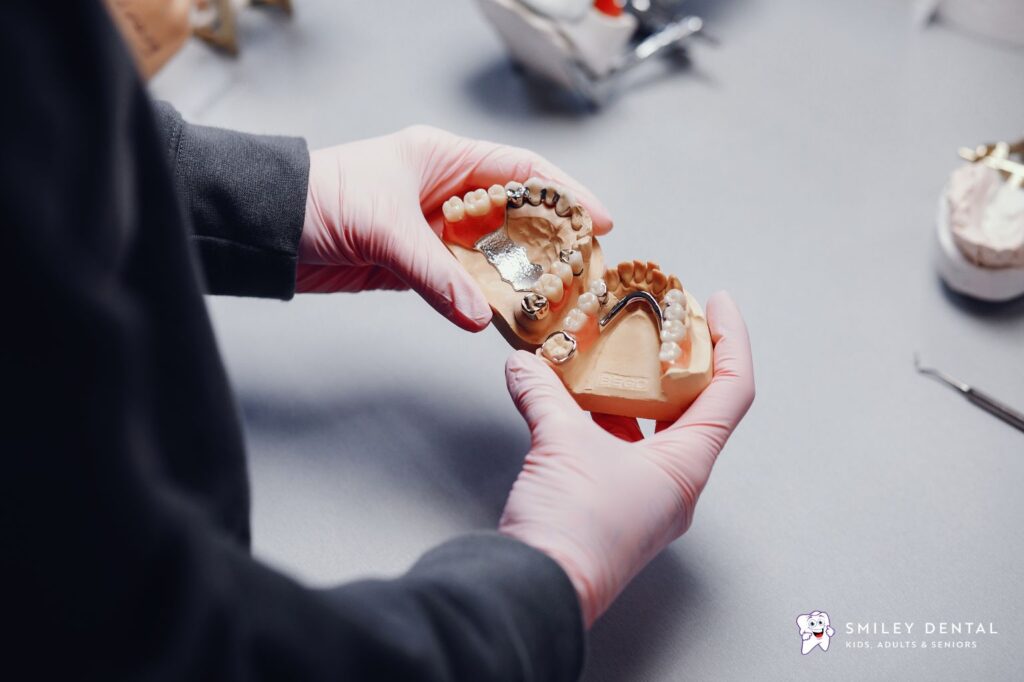
If you already have a dental crown or your dentist has recommended one, you have probably wondered how long it will actually hold up. Dental crowns generally last about five to fifteen years with proper care, and many stay in good shape well beyond that. There is no built in expiration date stamped on a crown. What matters far more than its age is its condition, the health of the tooth underneath it, and how it has been cared for over the years.
Every mouth is different, which is why one person’s crown can still be going strong after twelve years while another needs attention after only six. Chewing patterns, grinding habits, the material the crown is made from, and the strength of the tooth structure supporting it all play a role. In this guide, we will walk through what really determines a crown’s lifespan, what can go wrong underneath one, and how to know when it is time to have yours looked at.
Quick Answer: How Long Do Dental Crowns Last?
Most dental crowns last somewhere between five and fifteen years, and it is not unusual for a well maintained crown to function well for twenty years or more. The exact lifespan depends on the crown’s material, how precisely it fits, your oral hygiene routine, the forces your bite places on it, and whether the natural tooth underneath stays healthy. Rather than replacing a crown automatically once it reaches a certain age, a dentist should evaluate its actual condition to decide whether it needs monitoring, repair, or replacement.
How Long Do Dental Crowns Usually Last?
Crowns do not fail on a fixed schedule. Instead, their lifespan tends to fall into a few general stages, each with a different level of concern.
A Crown That Is About Five Years Old
At this stage, a crown reaching its fifth year is nowhere near being considered old. In most cases it should still be functioning exactly as intended, assuming there has been no trauma, decay, or unusual wear.
A Crown That Is About Ten Years Old
This is often the point where patients start asking whether replacement is necessary. The honest answer is that a ten year old crown can still be perfectly healthy. What matters is whether the margins remain tight, whether the tooth underneath is free of decay, and whether the crown itself shows any cracking or wear.
A Crown That Has Lasted Fifteen Years or More
Some crowns remain functional for two or three decades. Longevity at this stage depends heavily on the original material, how the tooth has been treated since placement, and whether any damage has occurred along the way. A crown reaching this age is not automatically a problem, but it is a good candidate for a closer look during your regular dental exam.
Can Teeth Still Develop Problems Underneath a Crown?
Yes. A common misconception is that once a tooth is covered by a crown, it is protected from decay for good. In reality, the crown covers the visible surface of the tooth, but the edge where the crown meets the natural tooth, known as the margin, is still vulnerable.
Plaque can build up along that margin the same way it would on any other tooth surface. If the crown does not fit as precisely as it once did, or if gum tissue has receded and exposed part of the root, bacteria can find their way in and cause decay underneath the restoration. This is sometimes referred to as recurrent decay, and it is one of the more common reasons a crown eventually needs to be redone.
The takeaway here is not that crowns are unreliable, but that the tooth underneath still needs the same daily attention as your natural teeth.
What Should You Expect From a Crown After a Decade of Use?
Reaching the ten year mark does not mean a crown needs to come out. What it does mean is that it is worth having a dentist take a closer look at a few specific things:
- Whether the margins are still snug against the tooth
- Whether there are any hairline cracks or chips
- Whether the bite still feels balanced
- Whether there is any sensitivity, discomfort, or looseness
- Whether an X-ray shows any decay forming underneath
If everything checks out, there is no reason to replace a crown simply because of its age. Many crowns that are examined at the ten year point are found to be in excellent shape and go on to serve their patient for many more years.
What Are the Factors That Influence How Long a Crown Will Last?
A crown’s lifespan is rarely determined by just one thing. It is usually a combination of the following.
Crown Material
Zirconia, porcelain fused to metal, lithium disilicate, metal, and resin crowns all behave differently under pressure. Zirconia and metal tend to be particularly strong, while resin crowns are generally more prone to wear and are often used as a shorter term solution. No single material is automatically the best choice for every patient; the right option depends on which tooth is being restored and how much force it will need to withstand.
| Material Type | Typical Lifespan | Commonly Used For | Durability |
| Zirconia | 15 to 20+ years | Molars, back teeth | High |
| Porcelain fused to metal | 10 to 15 years | Front and back teeth | High |
| Lithium disilicate (E-Max) | 10 to 15 years | Front teeth, aesthetic cases | Moderate to high |
| Gold or metal alloys | 20+ years | Back molars | Very high |
| Composite resin | 3 to 5 years | Temporary or interim use | Lower |
These are general ranges seen in clinical use rather than guarantees, since fit, bite forces, and home care still make a real difference for any material.
How Well the Crown Fits
A precisely fitted crown limits the space where bacteria and food particles can collect. Even a small gap at the margin can eventually lead to decay or gum irritation, so a well made crown with an accurate fit tends to hold up longer.
Daily Oral Hygiene Habits
Brushing twice a day with fluoride toothpaste, cleaning between your teeth daily, and keeping up with professional cleanings all reduce the buildup of plaque around the crown’s edge. This is one of the biggest factors within your control.
Teeth Grinding and Clenching
Also known as bruxism, grinding places repeated stress on crowns, especially at night when many people are unaware they are doing it. Over time this can lead to chipping, cracking, or loosening. A custom night guard can significantly reduce this risk.
Location of the Tooth in Your Mouth
Back teeth absorb much more chewing force than front teeth, simply because of their role in grinding and breaking down food. This does not mean back crowns always fail sooner, but it does mean they are working under different conditions than a crown on a front tooth.
Condition of the Remaining Natural Tooth
A crown is only as strong as the tooth structure supporting it. A tooth with plenty of healthy structure remaining tends to support a crown better than one that has been heavily treated or weakened over the years.
Gum Health Over Time
Receding gums can expose the edge of a crown or the root surface beneath it, creating new areas that are more susceptible to decay or sensitivity. Keeping up with periodontal care helps protect the crown indirectly.
Diet and Chewing Habits
Biting into extremely hard foods such as ice, hard candy, or unpopped popcorn kernels, or chewing on pens and other objects, can chip or crack a crown well before its time.
Previous Root Canal Treatment
Teeth that have had root canal treatment are structurally different from those that have not, since some of the internal tooth material has been removed. This does not mean these crowns are destined to fail, but it is one more factor your dentist will weigh when assessing long term outlook.
Does Crown Material Really Change How Long It Lasts?
Material does matter, but it is not the only variable, and it is not accurate to say one option is universally superior. Zirconia is known for its strength and resistance to fracture. Porcelain fused to metal combines a durable metal base with a natural looking outer layer. Lithium disilicate offers a strong, tooth colored option often used for visible teeth. Resin crowns tend to wear down faster and are usually intended as an interim solution rather than a long term restoration.
Rather than asking which material lasts the longest in general, it is more useful to ask which material is right for your specific tooth, bite, and aesthetic goals. Your dentist can walk you through that decision based on your individual situation.
Is There a Difference Between Crowns on Front Teeth and Back Teeth?
Front teeth and back teeth do different jobs. Front teeth are mainly used for biting and speaking, while back teeth handle the heavier work of chewing and grinding food. Because of this, the forces acting on a back tooth crown are often greater than those on a front tooth crown.
That said, it would be inaccurate to say front crowns always outlast back crowns or the other way around. A back tooth crown made from a strong, well suited material can perform just as reliably as a front tooth crown, and habits like grinding can affect either location. The honest answer is that location influences performance, but it works alongside material choice and individual habits rather than acting alone.
What Are the Possible Drawbacks of Getting a Crown?
Crowns are a widely used and generally reliable way to restore a damaged or weakened tooth, but it is fair to understand the trade offs involved.
Preparing a tooth for a crown requires removing a portion of the natural enamel to make room for the restoration, which is a permanent step. Some patients notice temporary sensitivity in the days or weeks following placement. Over time, crowns can chip or crack, particularly under heavy bite forces or grinding. The tooth underneath can still develop decay near the margin if oral hygiene lapses. And while crowns are durable, they are not designed to last indefinitely, so future repair or replacement is a realistic possibility down the road.
None of this makes crowns a poor choice. For a tooth that is cracked, badly decayed, or structurally weakened, a crown is often what allows that tooth to keep functioning for many more years rather than being extracted.
Understanding Crown Survival Rates Versus Failure Rates
You may come across claims online stating that crowns have a specific failure rate, such as five percent. These figures are usually taken out of context. Dental research reports survival rates rather than one blanket failure percentage, and those numbers vary based on the crown material, the tooth being restored, whether it is a natural tooth or an implant, and how long patients were followed after treatment.
Recent research reviewing several types of tooth supported crowns found five year survival rates ranging roughly from the low nineties to nearly ninety nine percent, depending on the material and design being studied. In other words, survival is generally high, but it is not identical across every situation. A dentist evaluating your crown is looking at your specific tooth and your specific crown, not a generic statistic.
Warning Signs That Your Crown May Need Attention
Most crown related issues give some kind of signal before they become a bigger problem. Keep an eye out for:
- A crown that feels loose or shifts when you bite down
- Visible cracks or chips in the crown itself
- New or ongoing sensitivity to hot, cold, or sweet foods
- Discomfort when chewing on that side of your mouth
- Food regularly getting trapped around the crown
- Swollen or bleeding gum tissue near the restoration
- A noticeable change in how your bite feels
- Visible dark staining at the edge of the crown
None of these signs mean the crown must be replaced immediately, but they are all good reasons to schedule an evaluation rather than waiting for the issue to worsen. A comprehensive dental examination is the most reliable way to catch these issues early.
Can a Damaged Crown Be Repaired Instead of Replaced?
In some cases, yes. Whether a crown can be repaired depends on the type of damage, its location, how much of the crown is affected, and the condition of the tooth underneath. A small chip on a porcelain surface, for example, may sometimes be smoothed or patched, while a crack that runs through the structure of the crown usually calls for a full replacement.
There has been a growing shift within dentistry toward repairing restorations when it is clinically appropriate, rather than defaulting to full replacement every time. Still, repair is not the right answer for every damaged crown, and your dentist will base that decision on a direct examination rather than a general rule.
Could You Still Need a Root Canal on a Tooth That Has a Crown?
Yes, this is possible, and it surprises many patients. A crown protects the visible portion of a tooth, but it does not make the inner nerve of that tooth immune to problems. Deep decay that develops near the margin, an injury, or a crack that extends below the crown can all irritate or infect the nerve, sometimes years after the crown was placed.
If this happens, a root canal treatment can often be performed through the crown or by temporarily removing it, allowing the same crown or a new one to be placed afterward. Needing a root canal on a crowned tooth does not mean the crown itself failed; it simply reflects that the nerve inside a tooth can still run into trouble regardless of what is covering the outside.
Practical Ways to Extend the Life of Your Crown
While you cannot control every factor that affects a crown’s lifespan, plenty of it comes down to daily habits.
At home, brush twice daily with fluoride toothpaste, clean between your teeth every day, avoid chewing on extremely hard foods or objects like ice or pens, and ask your dentist about a custom night guard if you grind or clench your teeth.
With professional care, keep up with your regular cleanings and checkups, mention any sensitivity or discomfort as soon as it starts, and avoid assuming an older crown is fine just because it does not hurt. Routine professional dental cleanings go a long way toward keeping the margin around your crown free of the plaque buildup that leads to decay.
What To Do If Your Crown Comes Loose or Falls Out
If a crown becomes loose or comes off entirely, try to stay calm. Keep the crown in a safe place rather than discarding it, since it can sometimes be recemented. Avoid chewing on that side of your mouth until you are seen, and steer clear of household glue or adhesive, since these are not designed for use in the mouth and can complicate treatment.
Call your dental office as soon as possible. A dentist will need to examine both the crown and the tooth underneath, since the reason it came loose could range from a simple loss of cement to a more involved issue with decay or the tooth’s structure.
Are Dental Crowns Meant to Last a Lifetime?
No, and it is worth setting realistic expectations here. Crowns are built to be durable, and many patients enjoy the same crown for well over a decade, but they are not guaranteed to last forever. The right mindset is to view a crown the way you would any other restoration: something that should be monitored over time, maintained through good habits, and evaluated based on its actual condition rather than a fixed countdown clock. As part of restorative dentistry, crowns are meant to preserve a tooth for as long as realistically possible, not to serve as a one time fix that never needs attention again.
Getting Your Crown Evaluated in Beverly, Massachusetts
If you have a crown that is starting to feel different, or if it has simply been a while since anyone checked on it, our team at Smiley Dental Beverly can take a look. We serve patients throughout Beverly and the surrounding North Shore area, and we can assess whether your crown is holding up well, needs a minor repair, or is due for replacement. You can learn more about our dental crown services or read our related guide on getting a dental crown in Beverly, MA.
Frequently Asked Questions About Dental Crown Lifespan
Most patients feel little to no discomfort during crown replacement, since the area is numbed beforehand. Some mild sensitivity afterward is normal and usually settles within a few days.
Replacing a crown is generally similar in cost to placing a new one, since the process involves comparable steps such as preparing the tooth and fabricating a new restoration.
Yes. Decay can still form on the exposed root surface or along the edge of the crown, which is why continued brushing and flossing around that tooth remain important.
Many dental plans provide partial coverage for crown replacement once enough time has passed since the original placement, though coverage varies by plan, so it is worth checking with your provider directly.
While most crowns perform well for years, occasional issues such as sensitivity or a minor fit adjustment can surface within the first few weeks and are usually simple for a dentist to resolve.
A properly fitted crown should feel natural once you adjust to it, usually within a few days. If your bite continues to feel off, a quick adjustment visit can typically correct it.
Not necessarily. A night guard is mainly recommended for patients who grind or clench their teeth, since it helps protect crowns and natural teeth alike from added pressure.
A crown should be reviewed at each routine checkup, typically every six months, so any early changes in fit, wear, or the surrounding gum tissue can be caught before they become bigger problems.
Dental crowns can serve you well for many years, but how long yours lasts really comes down to its condition, the health of the tooth underneath, and the daily care it receives. If you have an older crown, or you’ve noticed any looseness, sensitivity, or discomfort, schedule a visit with Smiley Dental Beverly and we’ll take a close look to see whether it just needs monitoring, a simple repair, or a replacement.