
Dental bonding and veneers can both improve the appearance of discolored or stained teeth, but they work in different ways. Bonding uses tooth-colored composite resin that is shaped directly onto the tooth, while veneers cover the front surface of the tooth with a thin custom-made shell. Bonding is usually less invasive and less expensive, while veneers may offer greater stain resistance and durability depending on the material used. The best option depends on the condition of your teeth, the type of staining involved, and your cosmetic goals, which is why a dental evaluation matters before choosing either treatment.
Quick answer: Dental bonding and veneers can both improve the appearance of stained teeth, but they work differently. Dental bonding uses tooth-colored composite material that is shaped directly on the tooth, while veneers cover the front of the tooth with a thin shell. Bonding is usually more affordable and less invasive, while veneers may offer greater durability and stain resistance. As part of cosmetic dentistry, a dentist can determine which option is appropriate after evaluating the teeth and the type of discoloration during a dental exam.
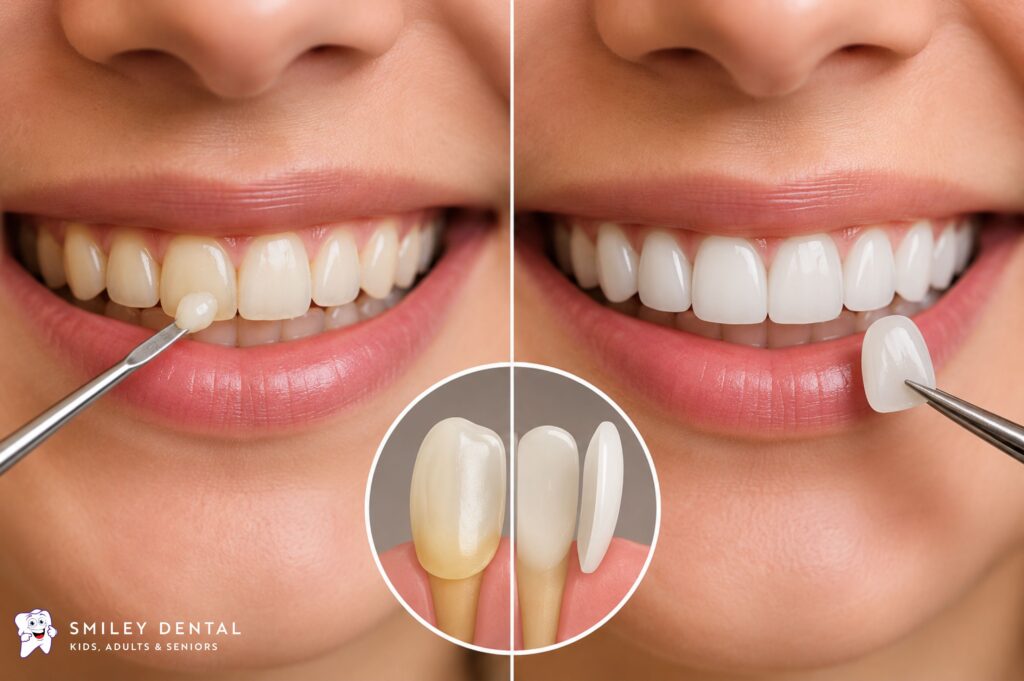
What Is Dental Bonding for Stained Teeth?
Dental bonding is a cosmetic treatment that uses a tooth-colored composite resin to cover or reshape a stained tooth. The material is applied directly to the tooth surface, sculpted by hand, and then hardened with a curing light. Once shaped, the dentist polishes the bonding so it blends in with the surrounding teeth.
Bonding is often considered a conservative cosmetic option because it typically requires little to no removal of natural tooth structure. A dentist matches the composite shade to the surrounding teeth so the treated tooth blends into your smile. Because bonding is applied and shaped in a single visit, it can be a practical choice for smaller cosmetic changes.
That said, bonding is not a one-size-fits-all fix. Its suitability depends on the type and severity of discoloration. A dentist can review the affected tooth and explain whether bonding may be an appropriate option for your situation.
What Are Veneers for Stained Teeth?
Dental veneers are thin, custom-made shells that are bonded to the front surface of a tooth to change its color, shape, or overall appearance. Unlike bonding, which is built up directly on the tooth, veneers are typically fabricated and then placed over the tooth as a covering.
Veneers can be made from different materials, including porcelain, and the material used can affect appearance, durability, and cost. Because veneers cover the visible surface of the tooth, they may be considered when discoloration has not responded well to other cosmetic options, such as whitening.
Before veneers are placed, the underlying tooth needs to be evaluated. This helps a dentist confirm that the tooth structure, bite, and oral health are appropriate for the treatment.
Dental Bonding vs. Veneers: What Is the Difference?
The table below offers a simple side-by-side comparison to help you understand how bonding and veneers generally differ.
| Factor | Dental Bonding | Dental Veneers |
| Material | Tooth-colored composite resin | Thin veneer material (often porcelain) |
| Application | Applied and shaped directly on the tooth | Custom-made, then placed over the front surface |
| Invasiveness | Generally more conservative | May involve some enamel preparation |
| Cost | Generally lower | Generally higher |
| Stain resistance | Can stain over time | Material-dependent, often more stain-resistant |
| Durability | May require repairs or touch-ups | Often longer-lasting when properly maintained |
| Maintenance | May need polishing or repair | May require replacement over time |
| Best use | Depends on tooth condition and cosmetic goals | Depends on tooth condition and cosmetic goals |
This table is meant as a general reference. It is not a guarantee that one option will always outperform the other for every patient.
Which Is Better for Stained Teeth: Bonding or Veneers?
Neither bonding nor veneers is automatically the better choice for every person. The right option can depend on several factors, including:
- Type and cause of tooth discoloration
- Severity of staining
- Existing tooth structure and fillings
- Enamel condition
- Bite alignment
- Number of teeth involved
- Desired cosmetic result
- Budget
- Maintenance expectations
- Long-term goals
Because these factors vary from person to person, a dental examination is an important step before deciding between bonding and veneers.
What Are the Downsides of Dental Bonding?
Dental bonding has some limitations worth understanding before treatment. These are common considerations, though outcomes vary by patient:
- Composite material can stain or discolor over time
- Bonding may chip or wear with normal use
- It may not last as long as some veneer materials
- Repairs or touch-ups may sometimes be needed
- The material may not be suitable for every type of discoloration
- Results can depend on the condition and location of the tooth being treated
These points are not meant to suggest bonding is a poor treatment choice. For many patients, bonding remains a practical and conservative way to address certain cosmetic concerns. A dentist can walk through what to expect based on your specific teeth.
Why Do Dentists Advise Against Veneers?
Veneers can be an excellent cosmetic option for many patients, but they are not appropriate for everyone. A dentist may recommend a different approach in certain situations, such as:
- Oral health issues that need to be addressed first
- Insufficient healthy tooth structure to support a veneer
- Certain bite problems
- Teeth that are heavily damaged or decayed
- Habits, such as teeth grinding, that could place extra stress on veneers
- Cosmetic concerns that could be treated with a more conservative option
- Patient expectations that may not align with what veneers can realistically provide
It is also worth understanding that veneer treatment may involve some enamel preparation, depending on the type of veneer and the treatment approach used. This is one reason an evaluation matters before moving forward with veneers.
Is Composite Bonding Cheaper Than Veneers?
Composite bonding is generally less expensive than veneers. However, the final cost for either treatment can vary based on several factors, including:
- Number of teeth being treated
- Amount of composite or veneer material needed
- Complexity of the case
- Dental office and geographic area
- Type of veneer material selected
- Laboratory costs associated with veneers
- Whether additional dental treatment is needed before cosmetic work
Because pricing depends on so many individual factors, the most accurate way to understand cost is through a personalized estimate from your dental office.
How Much Does One Composite Bonding Treatment Cost?
There is no single price that applies to every dental office or every patient. The cost of bonding one tooth can depend on the size of the area being treated, the amount of composite material required, the complexity of shaping the tooth, the dentist’s fees, and whether any other dental work is needed first.
If you are curious about pricing for your specific situation, the team at Smiley Dental Beverly can provide a personalized estimate after an examination.
How Long Does Dental Bonding Last Compared With Veneers?
Dental bonding can provide a noticeable cosmetic improvement, but it may require maintenance over time. It can chip, wear, or stain depending on oral habits, the location of the tooth, the material used, and how well it is cared for.
Veneers can offer a longer-lasting cosmetic result in appropriate cases, though they can still require replacement eventually. Longevity depends on the veneer material, bite, oral habits, and ongoing dental care. In both cases, regular oral hygiene and routine dental exams play an important role in how long the results last.
Can Dental Bonding Fix All Types of Stained Teeth?
No. Dental bonding is not suitable for every type or severity of tooth discoloration. Some stains may respond better to professional whitening, while other discoloration may be related to changes inside the tooth itself rather than surface staining. Teeth with existing restorations, or those with more severe discoloration, may need a different cosmetic approach altogether. A dentist can evaluate the cause and appearance of your staining to help determine which option, if any, may be appropriate.
What Should I Ask Before Choosing Bonding or Veneers?
Before deciding between bonding and veneers, consider asking your dentist:
- What is causing the discoloration?
- Is bonding suitable for my teeth?
- Would veneers be appropriate for my situation?
- Do I need whitening before any cosmetic treatment?
- How much tooth preparation is required?
- What material would be used?
- How long could the treatment reasonably last?
- Could the material stain or chip over time?
- What maintenance will I need afterward?
- What is the estimated cost?
- Are there alternative cosmetic treatments to consider?
- What happens if I choose not to treat the discoloration?
These questions can help you feel informed and prepared for a conversation with your dental provider, without pointing you toward one treatment over another.
How to Choose Between Dental Bonding and Veneers
Choosing between bonding and veneers usually comes down to comparing a few key factors: the condition of your teeth, the type of discoloration you have, your desired appearance, how invasive you are comfortable with, expected maintenance, durability, cost, the number of teeth involved, and your long-term goals. A dentist’s professional evaluation ties all of these factors together and helps you understand which option may be appropriate for your circumstances.
Cosmetic Dentistry Options in Beverly, MA
Patients in Beverly, MA who are exploring ways to address stained or discolored teeth have more than one cosmetic option to consider. In addition to bonding and veneers, teeth whitening may be worth discussing, particularly for surface-level staining. A comprehensive dental exam is typically the starting point for any cosmetic conversation, since it allows your dentist to evaluate your teeth and oral health before recommending next steps. From there, a consultation can help you understand which cosmetic dentistry options may fit your goals.
Dental Bonding and Veneers at Smiley Dental Beverly
Smiley Dental Beverly offers cosmetic dentistry services, including porcelain dental veneers and teeth whitening, for patients exploring ways to address stained or discolored teeth. The practice welcomes patients of all ages in Beverly and the surrounding Massachusetts communities and offers patient financing options to help make cosmetic treatment more manageable. If you are ready to talk through your options, you can request an appointment to start with a dental evaluation.
Comparing Dental Bonding and Veneers
| Factor | Bonding | Veneers |
| Main material | Composite resin | Veneer material |
| Treatment approach | Material is shaped on the tooth | Thin covering placed on the tooth |
| Cost | Usually lower | Usually higher |
| Tooth preparation | Generally conservative | May require some enamel preparation |
| Stain resistance | Can stain over time | Generally more resistant, depending on material |
| Repairs | May be repaired or touched up | May require replacement if damaged |
| Maintenance | Regular dental care and possible maintenance | Regular dental care and possible maintenance |
| Suitability | Depends on tooth condition | Depends on tooth condition |
Frequently Asked Questions About Dental Bonding and Veneers
Bonding applies tooth-colored composite material directly to the tooth, while veneers cover the front surface of the tooth with a thin, custom-made shell.
Neither is automatically better for everyone. The choice depends on the type of staining, the condition of the tooth, your cosmetic goals, and a dental evaluation.
Veneers may not be appropriate when oral health issues, limited tooth structure, bite problems, certain habits, or unrealistic treatment expectations make another option more suitable.
Bonding may stain, chip, wear, or require maintenance over time, and it may not be suitable for every type of discoloration.
Composite bonding is generally less expensive than veneers, though actual costs vary based on the case.
The price varies depending on the dental office, the tooth being treated, the complexity of the case, location, and the amount of material needed. Ask your dental office for a personalized estimate.
Composite bonding can become stained or discolored over time, depending on the material, your habits, and how well it is cared for.
Veneers are not considered a lifetime treatment. They may eventually need replacement depending on wear, material, and care.
Whitening may be an option for some types of tooth discoloration, but it does not work the same way for every type of stain.
A dentist needs to evaluate your teeth, the type of discoloration, your oral health, bite, and cosmetic goals before recommending an appropriate option.
Why Consider Smiley Dental Beverly?
Smiley Dental Beverly offers a range of dental services for patients in Beverly, MA, including cosmetic treatments, dental exams, and patient resources designed to support informed decision-making. The practice offers patient financing options and welcomes new patients from Beverly and the surrounding North Shore communities. If you have questions about your care, the practice’s FAQ page and contact page are useful starting points.
Conclusion
Dental bonding and veneers can both improve the appearance of certain stained teeth, but they take different approaches to get there. Bonding uses composite material applied directly to the tooth, making it a generally conservative and more affordable option. Veneers cover the front surface of the tooth and may offer greater durability and stain resistance depending on the material chosen. Both treatments have advantages and limitations, and the right option depends on the condition of your teeth, the type of discoloration, your cosmetic goals, maintenance expectations, and budget.
If you live in Beverly, MA and are curious about your options for stained or discolored teeth, a dental examination can help determine which treatments may be appropriate for you. The team at Smiley Dental Beverly is available to discuss cosmetic dental options and help you request an appointment to get started.