Children should begin dental care at an early age, and parents don’t need to wait until all baby teeth have come in. An early dental visit helps monitor developing teeth, catch small concerns before they grow, and helps a child get comfortable with the dental office itself. The right timing and frequency can depend on your child’s individual needs, but starting early is generally part of good preventive dental care.
Quick Answer
Children should begin dental visits early in childhood rather than waiting until they’re several years old. A first visit lets a dentist check developing teeth, discuss brushing and oral hygiene, identify possible concerns, and help the child get comfortable with children’s dental care. Follow your dental professional’s recommendations for future visits based on your child’s needs.
What Age Should a Child Have Their First Dental Visit?
Most dental guidance points to scheduling a first visit around age one, or within six months of the first tooth appearing, whichever comes first. Baby teeth matter more than many parents expect. They help with chewing and speech, and they hold space for the adult teeth coming in later. Waiting for pain or an emergency means missing the chance to catch small issues early, which is one reason same-day emergency care shouldn’t be the first time your child sees a dentist. An early visit also helps establish a consistent dental home, where your child’s teeth are monitored over time and you receive age-appropriate guidance on brushing, flossing, and diet.
Should a 2-Year-Old Go to the Dentist?
Yes, toddlers can benefit from dental care at this age. A dentist may check for early signs of decay, look at how the teeth and gums are developing, and offer oral hygiene guidance suited to a toddler’s needs. These early appointments are often short and simple, focused on letting the child get familiar with the dental chair rather than extensive treatment. Getting comfortable early tends to make future visits easier, and parents shouldn’t wait until a toddler develops tooth pain to schedule that first appointment.
Should My 4-Year-Old Go to the Dentist?
Yes, children around this age should continue receiving regular dental care. Visits at four help monitor primary teeth, check for cavities, evaluate brushing habits, and keep an eye on gum health and overall dental development. It’s also a good time to address any concerns a parent has noticed, like a change in a tooth’s appearance or ongoing sensitivity. If your four-year-old hasn’t yet established regular dental care, this is a reasonable time to start.
Why Are Early Dental Visits Important for Kids?
- Helps monitor developing teeth as they come in
- Allows a dental team to identify potential problems early
- Gives parents practical guidance on brushing and oral hygiene
- Helps children become familiar with the dental environment
- Encourages positive dental habits from a young age
- Gives parents a chance to ask questions
- Helps establish regular dental care as a routine part of life
Early visits don’t guarantee a child will never develop a cavity, but they give a dental team the best chance to catch small concerns before they grow.
What Happens During a Child’s First Dental Visit?
Getting to know the child. The dental team typically talks with the child and parent about dental history and any concerns.
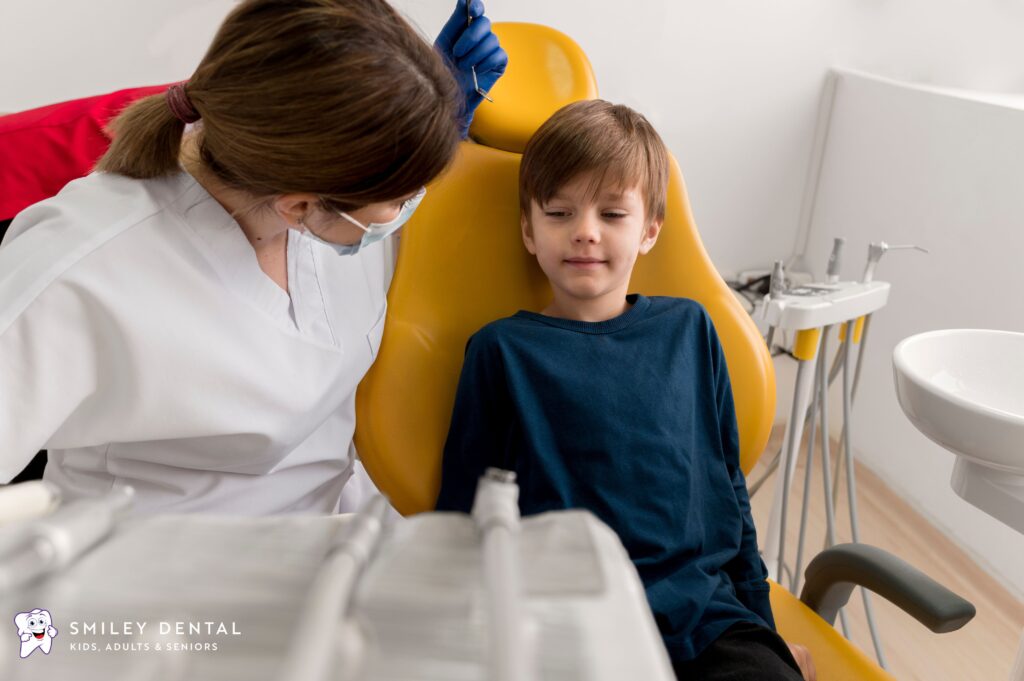
Dental examination. The dentist examines the child’s teeth, gums, and mouth, using a gentle, step-by-step approach so the child knows what to expect before anything happens.
Discussion with parents. This usually covers brushing, toothpaste, oral hygiene habits, diet, thumb-sucking or pacifier use if relevant, and how the teeth are developing.
Preventive guidance. Parents often receive practical recommendations for maintaining their child’s oral health at home.
Future appointments. The dental professional can recommend an appropriate schedule for future visits based on what they see.
Not every first visit looks the same, since it depends on the child’s age, comfort level, and any specific concerns.
How Often Should Kids Go to the Dentist?
Many children benefit from a checkup roughly every six months, though the right schedule can depend on their oral health, any previous concerns, and their dentist’s recommendations. Some children need more frequent visits, while others may be fine on a slightly different schedule. Regular checkups help with monitoring tooth development and reinforcing preventive care, but the exact frequency is worth working out with your child’s dental professional rather than following a fixed rule.
What Is the 3-3-3 Rule for Teeth?
The “3-3-3 rule” is a mnemonic some dental offices use to help patients remember healthy habits, but it isn’t a single, universally defined clinical standard. Different practices describe it differently, some tie it to brushing three times a day for three minutes, others add a waiting period after eating, and others use it for replacing a toothbrush every three months. Because the definition varies, it’s more useful to focus on established basics: brushing properly with age-appropriate fluoride toothpaste, cleaning between teeth once they touch, and keeping up with regular dental visits. Ask your child’s dentist for guidance suited to your child’s age rather than relying on a catchy rule alone.
How Can Parents Prepare Kids for Their First Dental Visit?
- Explain the appointment in simple, positive words
- Avoid frightening language like “shots” or “drilling”
- Talk about taking care of teeth in an upbeat way
- Let your child ask questions
- Read a children’s book about visiting the dentist beforehand
- Explain that the dentist will look at their teeth
- Bring a comfort item if that helps your child feel at ease
The goal is to make the visit feel familiar rather than something to worry about. Avoid making promises about exactly what will happen, since every visit can look a little different.
What Should Parents Ask at a Child’s First Dental Visit?
- Are my child’s teeth developing normally?
- How should I be brushing my child’s teeth?
- What type of toothpaste should I use, and how much?
- How often should my child brush?
- Are there foods or drinks I should limit?
- How often should my child have checkups?
- What signs of dental problems should I watch for?
- Does my child need any additional preventive care, like sealants?
- When should my child’s next appointment be?
- What should I do if my child develops tooth pain?
When Should I Take My Child to the Dentist?
Don’t wait for a routine appointment if your child develops a dental concern. Situations worth a prompt call include tooth pain, swelling around the mouth or gums, a damaged or broken tooth, a dental injury, sensitivity or discomfort, visible changes in a tooth, or ongoing mouth discomfort. For urgent or serious symptoms, contact a dental professional promptly rather than waiting to see if it resolves on its own.
Children’s Brushing and Oral Hygiene Tips
Helping a young child brush well takes some hands-on involvement, especially before they have the fine motor skills to do it thoroughly. A consistent routine helps: brushing at the same times each day, using age-appropriate toothpaste, and teaching kids not to swallow it. For children under three, a rice-sized smear of fluoride toothpaste is typically enough; for children three and older, a pea-sized amount twice a day (spit, don’t rinse) is a common guideline. Replace toothbrushes when bristles wear out, encourage water between meals, and limit frequent snacks, juice, and sticky sweets.
How to Choose a Dentist for Kids in Beverly, MA
Compare dental offices based on their children’s dental services, experience treating young patients, how they communicate with parents, and how child-friendly the approach feels. Also look at preventive care options, office location, appointment availability, insurance information, and payment options. The right fit depends on what matters most to your family, since no single dentist is the best choice for every child.
Children’s Dental Care at Smiley Dental Beverly
Smiley Dental Beverly offers general and preventive dentistry for children, including dental exams, routine cleanings, and fluoride, with a gentle, step-by-step approach designed to help kids feel comfortable in the chair. The office welcomes toddlers, school-age children, and teens, and parents are invited to stay in the room during visits. The practice also offers same-day help for toothaches, chips, or dental accidents, along with several patient financing options and information on accepted insurance plans. Confirm current details directly with the office for your child’s specific needs.
Comparing Children’s Dental Care Options
| Factor | What Parents Should Check |
| Children’s care | What services are available for children |
| First visit | How the office approaches a child’s first appointment |
| Examination | What’s included in a routine dental exam |
| Preventive care | What oral health guidance is provided |
| Communication | How the dental team communicates with parents |
| Location | Convenience for families in Beverly |
| Insurance | What your family’s plan may cover |
| Payment | Available payment options |
| Appointments | Scheduling convenience |
| Patient resources | Educational information available for families |
Frequently Asked Questions About Kids’ First Dental Visits in Beverly, MA
Children should begin dental care early in childhood, typically around age one or within six months of the first tooth appearing. Discuss the appropriate timing for your child with a dental professional.
Yes, toddlers can benefit from early dental visits, oral hygiene guidance, and the chance to get comfortable with the dental office before any concerns come up.
Yes, regular dental care remains important at this age for monitoring primary teeth, checking for cavities, and reinforcing good habits.
Early visits help monitor developing teeth, establish good habits, and give a dental team the chance to identify potential concerns before they grow.
It usually includes a gentle oral exam, a conversation with parents, and practical guidance on brushing and oral hygiene at home.
Many children do well with a checkup around every six months, though the right schedule depends on the child’s individual oral health.
It’s an informal mnemonic some dental offices use, with definitions that vary by practice. It’s not a single universal clinical standard, so established brushing habits and regular checkups matter more than the rule itself.
Use simple, positive language, avoid frightening words, and let your child ask questions beforehand so the visit feels familiar rather than intimidating.
Contact a dental professional promptly if your child has tooth pain, swelling, a damaged tooth, or another concerning symptom, rather than waiting for a routine visit.
Compare children’s services, communication style, preventive care, appointment convenience, insurance information, and available patient resources.
Final Thoughts
Children benefit from starting dental care early, and a first visit helps establish healthy habits that can last a lifetime. Toddlers and preschool-aged kids can both benefit from regular checkups, which give a dental professional the chance to monitor developing teeth and give parents a place to ask questions about brushing, diet, and oral health. The right visit schedule can vary from child to child, so it’s worth discussing your child’s specific needs directly with a dental professional rather than waiting for a problem to come up.
If you’re in Beverly and ready to schedule your child’s first visit or a routine checkup, contact Smiley Dental Beverly or request an appointment to get started.