Quick Answer
Professional teeth whitening generally delivers faster, more noticeable, and longer-lasting results than most at-home kits because it uses stronger whitening agents under professional supervision. In-office treatment can brighten teeth several shades in about an hour, while kits take days or weeks. At-home products can still work well for mild surface stains, though. The best option depends on your oral health, budget, and whitening goals, which a quick dental evaluation can help you sort out.
Walk down any drugstore aisle and you will find dozens of whitening kits, all promising a dazzling smile. So how do they compare to professional whitening at the dentist?
The honest answer is that both can work, but they are not equal. This guide compares professional teeth whitening and at-home kits across results, speed, safety, cost, and longevity, so you can choose the right path for your smile.
What Is Professional Teeth Whitening?
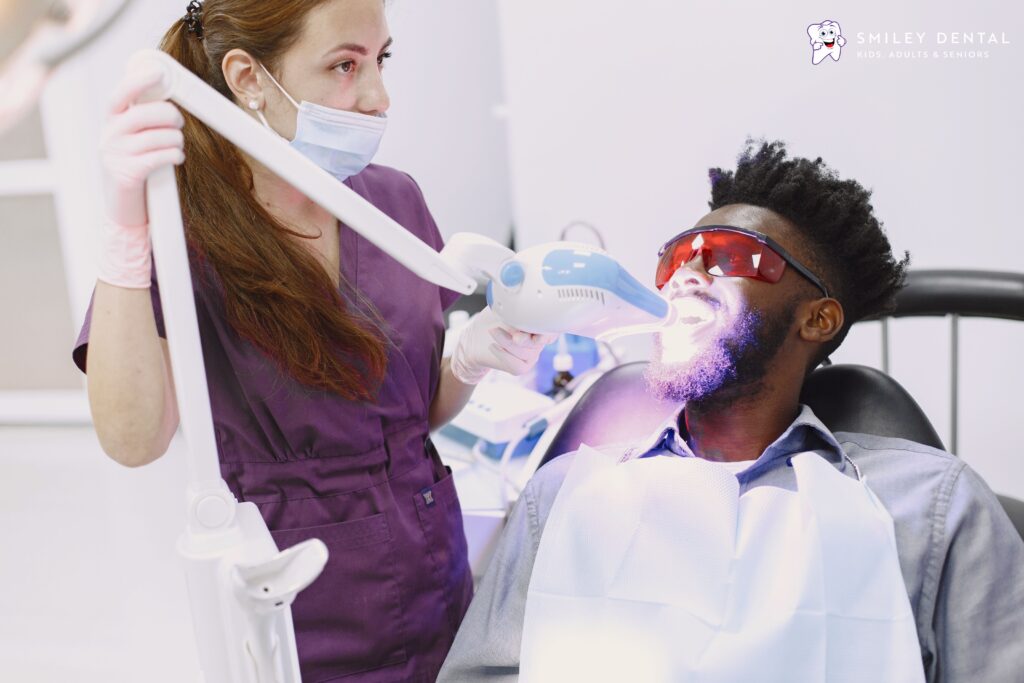
Professional teeth whitening is an in-office treatment performed by a dental team. It uses a high-concentration whitening gel, usually 15 to 35 percent hydrogen peroxide, far stronger than anything sold over the counter.
Your gums and lips are protected with a barrier, the gel is applied, and a light or laser may be used to speed up the reaction. The appointment takes about 60 to 90 minutes, and you often see results the same day.
The big advantages are strength and supervision. A dentist controls the gel concentration, protects your soft tissue, and monitors for sensitivity, which is why professional whitening is both effective and safe. It is one of the most popular treatments in cosmetic dentistry.
How Do At-Home Teeth Whitening Kits Work?
At-home kits use lower concentrations of whitening agent, applied by you over days or weeks. Common forms include:
- Whitening strips, thin peroxide-coated strips worn about 30 minutes a day for one to two weeks.
- LED whitening kits, which add a light, though research shows the light does little without professional-strength gel.
- Whitening toothpaste, mild abrasives that remove surface stains but barely change your shade.
- Whitening pens, paint-on gel for small touch-ups.
- Dentist take-home trays, custom-fitted trays with professional-grade gel, the strongest at-home option.
Store-bought products are convenient and affordable, but results come slowly and can be uneven, since one-size strips and trays do not fit every mouth perfectly.
Professional Teeth Whitening vs At-Home Kits
Here is an honest side-by-side comparison of the two approaches:
| Feature | Professional Whitening | At-Home Kits |
|---|---|---|
| Whitening results | Dramatic, even | Milder, can be patchy |
| Speed | One visit, about an hour | Days to weeks |
| Safety | Supervised, gums protected | Self-applied, more risk |
| Cost | Higher upfront | Lower upfront |
| Longevity | 1 to 3 years | 6 months to 1 year |
| Tooth sensitivity | Managed by dentist | Possible, unmonitored |
| Convenience | One appointment | Use at home anytime |
| Maintenance | Occasional touch-ups | Frequent repurchasing |
| Best candidates | Faster, dramatic results | Mild stains, budget |
Which Whitening Method Is More Effective?
It depends on your stains. Both methods work best on extrinsic, or surface, stains on the enamel. These respond well to whitening:
- Coffee and tea stains, among the most common and very treatable.
- Red wine stains, which respond well to peroxide whitening.
- Tobacco stains, which lift with professional treatment.
- Age-related yellowing on otherwise healthy teeth.
Intrinsic stains, which come from inside the tooth, are harder. Deep stains from certain medications, tetracycline, fluorosis, or injury do not respond well to whitening, and may need porcelain veneers or bonding instead. For surface stains, professional whitening is the more effective and even option, while quality at-home kits can handle mild cases.
Does Professional Teeth Whitening Work Better Than At Home?
Yes, in most cases. Professional whitening typically achieves more dramatic results, often five to eight shades lighter in a single visit, compared to two to four shades from at-home strips over several weeks.
The difference comes down to strength, precision, and supervision. Professional gels are far more concentrated, applied evenly across every tooth, and monitored by a dentist to protect your gums and manage sensitivity. At-home kits use weaker gel and can whiten unevenly, missing the gaps between teeth.
That said, dentist-provided take-home trays bridge the gap, offering professional-grade gel in custom trays for excellent results at home. Many dentists recommend combining in-office whitening with take-home trays for the best, longest-lasting outcome.
Can Yellow Teeth Be Professionally Whitened?
Usually, yes. Yellow teeth are one of the best cases for whitening, since yellowing most often comes from surface stains and natural aging, both of which respond well to professional treatment.
The cause matters, though. Yellowing from coffee, tea, wine, tobacco, or age whitens beautifully, while gray tones and deep internal stains respond less predictably. That is why a dental exam comes first: it identifies what is causing your discoloration and whether whitening, veneers, or bonding will give you the result you want.
Want to know which whitening option suits your smile?
The team at Smiley Dental Beverly will evaluate your teeth and recommend the safest, most effective approach. Call 978-288-1000 or request an appointment online .
Is Professional Teeth Whitening Worth the Cost?
For many people, yes. While professional whitening costs more upfront than a box of strips, it delivers faster, more dramatic, and longer-lasting results, changing the value equation.
Because professional results last one to three years versus a few months for most kits, you buy fewer products over time. You also get professional supervision, even results, and the confidence of a noticeably brighter smile. Costs vary based on the treatment type and your needs, and flexible financing can make it easier to fit into your budget.
Is Teeth Whitening Safe?
Yes, whitening is safe when done correctly, and professional whitening is the safest option of all. Your dentist protects your gums, controls the gel strength, and watches for sensitivity, preventing the irritation or over-whitening that can happen with unsupervised use.
The most common side effect is temporary tooth sensitivity, which usually fades within a day or two. Whitening does not damage healthy enamel at proper concentrations. It may not be recommended if you have untreated cavities, gum disease, or a lot of dental work on your front teeth. Whitening also does not change the color of crowns, veneers, or fillings, so they may no longer match afterward.
Ways to Maintain Your Whitening Results
Whatever method you choose, these habits help your results last longer:
- Brush and floss daily
- Reduce staining foods and drinks like coffee, tea, and red wine
- Drink water after coffee or tea
- Schedule routine dental cleanings
- Avoid smoking and tobacco
- Follow your dentist’s recommendations
- Use touch-up products when appropriate
Regular professional cleanings also remove fresh surface stains and help your whitening last.
Signs Professional Teeth Whitening May Be Right for You
Professional whitening may be a great fit if several of these describe you:
- You have yellow or stained teeth
- Your stains come from coffee, tea, or wine
- You have tobacco stains
- You have a special event coming up
- You have healthy teeth and gums
- You want faster, more noticeable results
Not Sure Which Whitening Option Is Right for You?
Every smile is unique. A professional dental evaluation can identify the cause of your discoloration, since some stains respond much better to professional treatment than others. Your dentist can then recommend the safest and most effective whitening option for your teeth, whether that is in-office whitening, custom take-home trays, or another cosmetic solution. The result is a brighter smile achieved the right way.
Why Choose Smiley Dental Beverly for Professional Teeth Whitening?
Our Beverly dental office at 45 Dodge Street offers experienced, personalized cosmetic care across the North Shore, including Danvers, Salem, Peabody, Wenham, and Hamilton.
- Experienced dental professionals, including members of the American Academy of Cosmetic Dentistry.
- Personalized whitening plans, matched to your stains and goals.
- Modern whitening technology, used safely and comfortably.
- Honest guidance on whether whitening or another option suits you.
- Flexible financing to make cosmetic care affordable.
Call 978-288-1000 or contact our Beverly team to schedule a whitening consultation.
The Bottom Line
Professional teeth whitening and at-home kits both brighten smiles, but they are not equal. Professional whitening generally provides faster, safer, and longer-lasting results, thanks to stronger gel, even application, and expert supervision, while at-home kits offer convenience and a lower upfront cost for milder stains. The best choice depends on your oral health, your budget, and how quickly and dramatically you want to see results.
Before starting any whitening, it is worth consulting a dental professional who can identify the cause of your discoloration and recommend the safest, most effective option. If you are ready for a brighter, healthier-looking smile, schedule a professional whitening consultation with Smiley Dental Beverly. Call 978-288-1000 or request an appointment online today.
Brighten your smile the right way.
Schedule a professional whitening consultation at Smiley Dental Beverly for safe, personalized care. Call 978-288-1000 or request an appointment online . Find us at 45 Dodge St, Beverly. New patients are always welcome.
Frequently Asked Questions
Everything you need to know about professional teeth whitening.
1. Does professional teeth whitening work better than at home?
Usually, yes. Professional whitening delivers faster, more dramatic, and more even results, often five to eight shades in one visit, because it uses stronger gel under supervision. At-home kits can help with mild surface stains but work more slowly and less predictably. Dentist take-home trays are the strongest at-home option.
2. What is the highest rated teeth whitening kit?
Among over-the-counter products, Crest 3D White Strips are consistently rated the top drugstore option. That said, dentist-provided custom take-home trays outperform any store-bought kit because they use professional-grade gel in trays fitted to your teeth. Your dentist can recommend the best kit for your needs.
3. What does Kim Kardashian use to whiten her teeth?
There is no reliable public confirmation of any single product. Bright celebrity smiles typically come from professional dental work, often a combination of professional whitening and, in many cases, porcelain veneers. The dependable path to a whiter smile is professional whitening tailored to your teeth, not chasing a specific celebrity product.
4. Can yellow teeth be professionally whitened?
Usually, yes. Yellowing from coffee, tea, wine, tobacco, or aging responds very well to professional whitening. Gray tones and deep internal stains respond less predictably and may need veneers or bonding. A dental exam identifies the cause and the best approach for your smile.
5. Is professional teeth whitening painful?
No. The treatment is not painful, though some people feel temporary tooth sensitivity during or after, which usually fades within a day or two. Your dentist protects your gums and manages sensitivity throughout, keeping you comfortable during the process.
6. How long do whitening results last?
Professional whitening results typically last one to three years with good care, while most at-home kits last six months to a year. Longevity depends on your habits, especially coffee, tea, wine, and tobacco use. Touch-ups and good oral hygiene keep your smile bright longer.
7. Can sensitive teeth be whitened safely?
Often, yes. Professional whitening is the safest choice for sensitive teeth because your dentist can adjust the gel strength, use desensitizing products, and monitor your comfort. If you have sensitive teeth, mention it at your consultation so your treatment can be tailored to you.
8. Can crowns, veneers, or fillings be whitened?
No. Whitening only lightens natural tooth enamel, not dental work. Crowns, veneers, and fillings keep their original color, so they may no longer match after whitening. If you have dental work on your front teeth, your dentist will plan around it during your consultation.
9. How often should I whiten my teeth?
It varies by method and person. Professional whitening is typically done once a year or so, with occasional take-home touch-ups in between. Overusing whitening products can cause sensitivity, so follow your dentist’s guidance rather than whitening too frequently.
10. What foods should I avoid after whitening?
For the first 48 hours, avoid staining foods and drinks like coffee, tea, red wine, berries, and tomato sauce, since teeth absorb color more easily then. Stick to lighter foods like chicken, rice, and pasta. After that window, you can return to your normal diet with good habits.