To prevent tooth decay, brush twice a day with fluoride toothpaste, clean between your teeth daily, limit sugary foods and drinks, and keep up with dental visits. Decay starts when plaque bacteria use sugar to make acid that weakens tooth enamel. Small daily habits lower that risk. This guide covers nine that work, and when you need a dentist instead.
Quick Answer
The most effective routine is brushing twice a day with fluoride toothpaste, cleaning between teeth daily, limiting sugary foods and drinks, drinking water, and seeing a dentist regularly. Early tooth decay can sometimes be stopped or reversed with fluoride and better habits. A cavity that has formed a hole usually needs a filling or other treatment from a dentist.
What Is Tooth Decay, and How Does It Start?
Tooth decay is damage to enamel, the hard outer layer of your teeth, caused by acid from plaque bacteria. Plaque is the sticky film that builds up on teeth. When you eat sugars or starches, the bacteria turn them into acid. Repeated acid exposure pulls minerals out of enamel, as the National Institute of Dental and Craniofacial Research explains.
Early on, this mineral loss often causes no pain. If it continues, it can become a cavity, which is a hole in the tooth. Early damage may be reversed. A hole cannot rebuild itself.
How to Prevent Tooth Decay: 9 Daily Habits That Actually Work
1. Brush Twice a Day With Fluoride Toothpaste
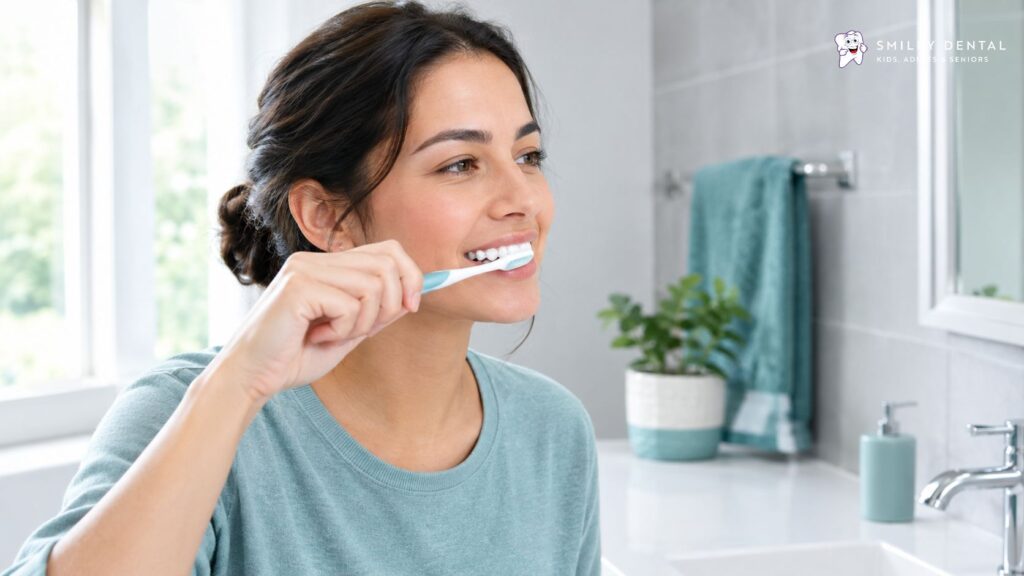
Brushing removes plaque, and fluoride strengthens enamel. Brush in the morning and before bed for about two minutes with a soft brush, covering every surface. Replace the brush when the bristles wear out. Pressing harder does not clean better and can irritate your gums.
For children, use a rice-grain smear of fluoride toothpaste until age 3, then a pea-sized amount from ages 3 to 6, and supervise brushing.
2. Clean Between Your Teeth Every Day
Bristles cannot reach every tight space, so plaque and food can stay behind. Clean between your teeth once a day with floss or another interdental cleaner, such as small brushes or a water flosser. The best tool depends on your tooth spacing, braces, or dental work. It adds to brushing and does not replace it.
3. Reduce Sugary Foods and Drinks
Cavity-causing bacteria use sugar to make acid. Common sources include soda, candy, pastries, sweetened coffee or tea, and sports or energy drinks. Cut back on both how much and how often you have them. One sweet treat will not cause a cavity, but repeated exposure adds up over time.
4. Choose Water Instead of Sugary Drinks
Swapping soda or juice drinks for water means fewer sugar exposures. Fluoridated tap water also adds protection against cavities, according to the CDC. Fluoride levels differ between communities, so check your local water report. Water does not replace brushing or dental care.
5. Avoid Constant Snacking and Sipping
Teeth lose and regain minerals throughout the day. Each snack or sip of a sweet drink can start another acid attack. Stick to regular meals, limit sugary snacks, and avoid sipping sweetened drinks for hours. Skip sugary foods and drinks after you brush at night. You do not need to give up snacks, only graze less often.
6. Choose Balanced Meals and Tooth-Friendly Snacks
A balanced diet supports your overall health and your teeth. Good snack options include vegetables, whole fruit, plain yogurt, cheese, and nuts when they are safe for the age. Whole fruit is not the same as sticky sweets or sugary drinks. No single food cures cavities or replaces fluoride.
7. Protect Your Saliva and Address Dry Mouth
Saliva washes away food, neutralizes acid, and supplies minerals that support enamel. Dry mouth can come from some medications, dehydration, and certain health conditions. Drink water regularly, and ask your dentist or doctor about dry mouth that does not go away. Sugar-free gum can help stimulate saliva. Do not stop a medication on your own.
8. Use Extra Fluoride or Sealants When Recommended
Some people benefit from a fluoride mouth rinse, prescription toothpaste, or professional fluoride treatments, depending on their cavity risk. These are not necessary for everyone, so follow your dentist’s advice and the label.
Dental sealants are thin protective coatings a dentist applies to the chewing surfaces of back teeth, as the CDC describes. They are an extra layer of protection, not a replacement for brushing.
9. Stay Consistent and Act Early
Prevention works best when you do it every day. Brush morning and night, clean between your teeth, limit repeated sugar exposure, and notice changes such as new sensitivity or spots. A routine dental exam lets a dentist find early problems before they cause pain. No routine guarantees you will never get a cavity, since saliva, tooth shape, diet, and medications all play a part.
What Naturally Stops Tooth Decay?
Saliva and fluoride, along with fewer acid attacks, can stop early decay. Saliva neutralizes acid and brings calcium and phosphate back to enamel. Fluoride helps enamel rebuild in a process called remineralization. Brushing, cleaning between teeth, and cutting back on frequent sugar all support it.
This only works for early damage, and a dentist can tell you what stage a tooth is in. Oil pulling, salt rinses, clove oil, charcoal, and coconut oil do not rebuild a tooth that has a cavity.
What Destroys Teeth the Most?
No single thing does. The most common cause of decay is frequent sugar and starch exposure combined with poor plaque control and too little fluoride. Dry mouth and skipped dental exams can raise the risk too.
Acidic drinks, such as soda, sports drinks, and citrus juice, can cause erosion. Erosion wears down enamel without bacteria and is a different process from decay, although both can happen together.
What Kills Decay in Teeth?
Nothing you do at home can kill decay once a cavity has formed. Early damage may be stopped with fluoride and better habits. A cavity is physical damage to the tooth, and a dentist usually treats it with a filling or another restoration.
Do not use antibiotics, household chemicals, or concentrated oils on a decayed tooth. Antibiotics are only for cases a dentist or doctor decides need them.
What Are 10 Things to Keep Your Teeth Healthy?
- Brush twice a day with fluoride toothpaste.
- Clean between your teeth daily.
- Limit sugary foods and drinks.
- Drink water regularly.
- Avoid constant snacking and sipping sweet drinks.
- Eat balanced meals and nutritious snacks.
- Address dry mouth that does not go away.
- Use fluoride products as recommended.
- Ask about sealants and other preventive care.
- Keep regular dental appointments and fix problems early.
The last two are preventive care from your dentist, not daily habits.
When Should You See a Dentist for Possible Tooth Decay?
See a dentist when you notice a change, even without pain, because early decay often has no symptoms. Look out for:
- White, brown, or dark spots on a tooth
- Sensitivity to cold, heat, or sweets
- Tooth pain
- A visible hole or chipped area
- Food that keeps getting stuck in one spot
These signs do not confirm a cavity on their own. A dentist may need to examine the tooth and take X-rays.
Facial swelling, fever with dental symptoms, or worsening severe pain needs prompt assessment. Trouble breathing or swallowing needs emergency medical care.
Preventive Dental Care in Beverly, MA
Patients in Beverly and nearby North Shore communities can talk with Smiley Dental Beverly about cavity prevention, fluoride options, exams, and treatment for existing decay. Services and availability vary, so confirm when you call. For more everyday oral health tips, browse our patient resources.
- Phone: 978-288-1000
- Address: 45 Dodge St, Beverly, MA 01915
- Hours: Monday to Friday, 9 AM to 5 PM; Saturday, 9 AM to 2 PM
Frequently Asked Questions
It lowers your risk a lot, especially with fluoride toothpaste, but it is not a guarantee. Cleaning between teeth and limiting sugar also matter.
Often, yes. Fluoride helps early enamel damage remineralize. It cannot fill a cavity that has already formed a hole.
No. Once a hole has formed, the lost tooth structure does not grow back. See a dentist to have it treated.
Yes. Water replaces sugary drinks and rinses food from your mouth, and fluoridated tap water adds protection. It does not replace brushing.
Yes. Enjoy sweets with a meal rather than all day, then brush with fluoride toothpaste. How often you eat sugar matters as much as how much.
Many people do well with an exam about every six months. The right schedule depends on your cavity risk, so ask your dentist.
Sources
NIDCR: Tooth Decay
NIDCR: The Tooth Decay Process
CDC: About Fluoride
CDC: Oral Health Tips for Adults
CDC: About Dental Sealants
American Dental Association
Conclusion: Small Habits, Steady Protection
You can prevent tooth decay with a steady routine: fluoride toothpaste, cleaning between teeth, less frequent sugar, and regular dental care. Early damage may be reversed, but a cavity needs a dentist.
Want to take the next step in preventing tooth decay? Call Smiley Dental Beverly at 978-288-1000 to schedule a dental examination and talk through preventive care for your teeth.